


Alberta Introduces Bill 18 to Strictly Regulate Medical Assistance in Dying

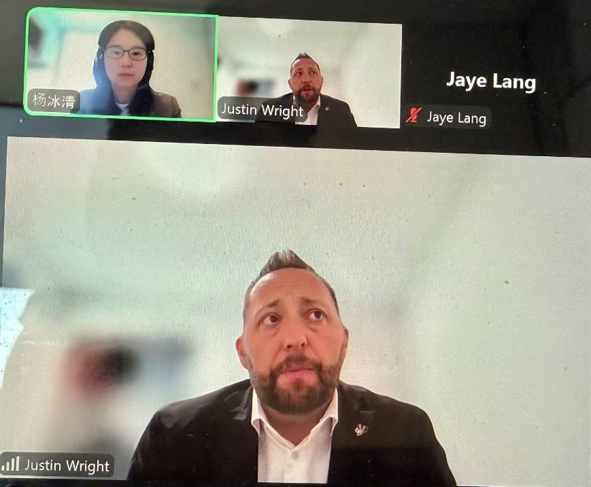
【CMHnews Edmonton post】On March 24, 2026, the Government of Alberta held an online Multicultural Media Roundtable. During the meeting, Mickey Amery, Minister of Justice, provided various ethnic media outlets with a detailed interpretation of Bill 18—the Safeguards for Last Resort Termination of Life Act—which the provincial government tabled in the legislature last week. The legislation is designed to address obvious gaps in the current federal Medical Assistance in Dying (MAID) framework by establishing strong provincial safeguards to protect vulnerable individuals and reaffirm the social consensus on the sanctity of life.
Reported by Lynn Wang
March 25th,2026
Following the 2021 amendments to Canada's MAID legislation, a "two-track" assessment system was implemented:
Track 1: Applies to patients whose natural death is reasonably foreseeable (typically terminally ill patients near the end of life).
Track 2: Applies to patients whose natural death is not foreseeable, but who are experiencing intolerable and irreversible suffering (such as those with chronic illnesses or disabilities).
The newly introduced Bill 18 in Alberta specifically aims to prohibit "Track 2" applications, thereby tightening the criteria for provincial MAID.
Providing health care and supporting the well-being of Albertans is one of the provincial government’s most important responsibilities. The consequences of a decision to access MAID are permanent and irrevocable. Alberta’s government must consider any policy impacting MAID with the utmost care and caution.
“This legislation strengthens safeguards and restores clear limits on eligibility to protect vulnerable Albertans facing mental illness or living with disabilities. Those struggling with severe mental health challenges need treatment, compassion and support, not a path to end their life at what may be their lowest moment. In Alberta, a patient whose sole underlying condition is mental illness will not be eligible for MAID.”
stated Danielle Smith, Premier of Alberta

Building Provincial Safeguards: Key Highlights of Bill 18
In his opening remarks, Minister Amery emphasized that MAID is one of the most serious decisions that any individual can make, and therefore it demands very careful safeguards and humility. According to Bill 18, Alberta will tighten regulations in the following areas:
• Prohibiting MAID Where Death is Not Foreseeable (Eliminating Track 2): MAID will be strictly limited to those whose natural death is reasonably foreseeable (Track 1). Advanced requests will not be permitted, along with MAID for individuals who lack the capacity to make their own healthcare decisions.
• Prohibiting MAID for Mental Illness: MAID will be strictly prohibited for individuals whose sole underlying condition is mental illness.
• Banning Advance Requests and Proxy Decisions: It prohibits individuals from making advance requests for MAID while they have capacity for an unknown future date.
• Cutting Off Out-of-Province Referrals: Physicians and nurse practitioners will be prohibited from making referrals for individuals to receive MAID outside of Alberta.
• Prioritizing Patient-Initiated Inquiries and Restricting Promotion: To reduce any coercion and ensure decisions are patient-driven, physicians will be restricted from giving MAID information to their patients when providing other healthcare services, unless that patient brings it up. Public display of MAID information, such as posters, will be restricted within healthcare facilities.
• Ensuring the Right of Refusal for Healthcare Providers: Bill 18 makes it clear that physicians have the right to refuse to conduct MAID assessments or provide MAID, and healthcare facilities have the right to refuse to provide MAID services on their premises.
The Intersection of Traditional Family Values and Legal Rights
During the interactive Q&A session, CMH News reporter pointedly raised the core concerns of the Chinese community:
"Our readers in the Chinese communities are very concerned about the balance between legal rights and traditional family values. Alberta's new legislation takes a significantly more restrictive stance than the federal framework by prohibiting 'Track 2' MAID and banning out-of-province referrals. While this may face constitutional challenges regarding Section 7 rights, many in our community deeply value the sanctity of life and family-centered care. Is this Act intended to align provincial law with these traditional values, addressing the legal tensions and ensuring that the state prioritizes treatment and compassion over a path to end life, especially when death is not imminent?"
Minister Amery acknowledged the question and responded that this is precisely the balance the bill seeks to achieve:
"Canada has the fastest growing rate ... medical assistance in dying deaths anywhere in the world. And we think that's cause for concern. We know that in Alberta, MAID deaths have increased in just 4 years by more than 109%. And we know that Canada-wide in those same 4 years ... That's from 2021 to 2024. That total MAID deaths in Canada have increased by 63%."
He then illustrated the rationale behind banning out-of-province referrals by referencing a case involving a patient with mental health challenges and diabetes in Ontario. After being denied MAID locally for years because he did not meet the criteria, the individual eventually secured it in British Columbia:
"We don't want people to do is to continue to look for new doctors, or go to different cities, or go to different provinces until they finally land on the right doctors to give them MAID. That's not what it was intended to do. It's an option of last resort, and that's what we want Bill 18 to maintain here in Alberta."
Supports to Assist Families
In response to concerns raised by other ethnic media outlets regarding differing cultural approaches to mental health and the potential for financial strain to drive despair, Minister Amery offered firm assurances:
• Substantial Budget Allocations: Alberta is investing more money in its mental health and addictions ministry than ever before, with a record $2 billion budget. Budget 2026 also includes an additional $3.7 billion to support Albertans with disabilities.
• Cross-Cultural Support: The government has introduced a comprehensive suite of navigators and support workers who are trained and come from the same communities they serve. These services are offered in multiple languages to support families in a setting where they feel comfortable.
• Mandatory Family Notification: Minister Amery pointed out that many who seek MAID are isolated from their communities, have low incomes, or suffer from depression. To address this, the bill requires that family members be notified when an individual is seeking MAID, enabling them to seek or provide support.
"Nobody should seek MAID without having the ability to talk to their family members and get some advice from their loved ones,” the Minister stated firmly.
Conclusion
The introduction of Bill 18 will undoubtedly spark significant debate across Canada's legal and medical landscapes and may face future constitutional challenges. However, for the Canadian Chinese community—which profoundly values the principles that "our bodies are derived from our parents" and advocates for comprehensive care for the sick and elderly—the Alberta government's decision to apply the brakes at this life-and-death crossroads provides a robust safeguard to protect the vulnerable and uphold human dignity.
《天时周刊》官网站
我们一起看世界!




Comments