


Alberta's New Immigration Oversight Act: CrackingDown on Fraud and Restoring Trust

【CMHNews Post】The Government of Alberta officially introduced Bill 26, the Immigration
Oversight Act, on April 1, 2026. This legislation aims to curb fraud and protect vulnerable
groups, including newcomers, by strengthening provincial oversight of employers, foreign
worker recruiters, and immigration consultants. At noon on April 2, 2026, Joseph Schow,
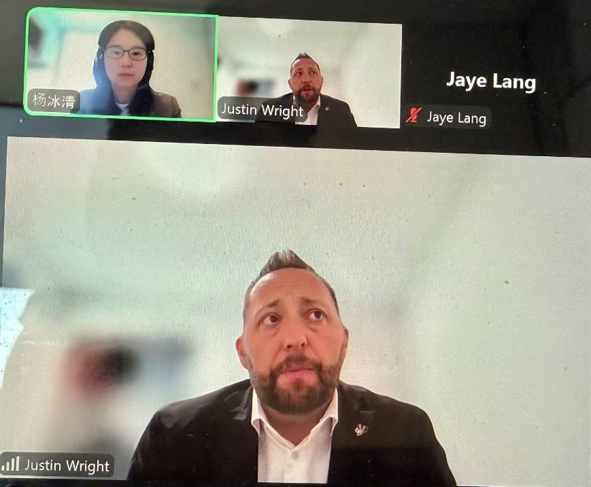
Minister of Jobs, Economy, Trade and Immigration, convened a roundtable meeting with
multicultural media outlets to address the specific execution of the bill and answer questions of public concern.
Reported by Lynn Wang
April 2nd,2026
Below is a detailed summary of the bill's core components and the key issues of interest to the Chinese community discussed during the closed-door media session:
I. Core of the Bill: Employer Registry and Licensing Systems
The crux of the legislation lies in expanding provincial control over the immigration and recruitment markets, utilizing structured oversight mechanisms to safeguard the legal rights and interests of vulnerable workers. The key initiatives include:
Employer Registry: Any Alberta employer wishing to access federal programs
to hire temporary foreign workers (such as applying for a Labour Market Impact
Assessment, or LMIA) will be required to register with the provincial government
first.
Licensing for Consultants and Recruiters: Immigration consultants and
foreign worker recruiters must obtain a specific license issued by the province of
Alberta to practice.
Enforcement Tools: The bill grants the provincial government the authority to
conduct independent investigations, issue compliance orders, levy administrative
penalties, and even suspend or revoke the licenses or registrations of non-
compliant employers or agencies.
Minister Joseph Schow stated during the roundtable
"This legislation improves accountability and gives the province more control
over how the immigration system is used... Our objective is to build a strong
system that protects vulnerable people and ensures that businesses are hiring
foreign nationals legitimately because they cannot find the employees in Alberta."
Furthermore, the bill explicitly prohibits predatory practices such as "fake job offers,"
"paid-for job offers," and charging "illegal fees" to workers. Violators could face steep
administrative penalties of up to $1.5 million, and severe cases could result in terms of
imprisonment.
II. Focus of the Chinese Community: How Will the Bill break the Deadlock of Current Immigration Challenges?
During the subsequent multicultural media roundtable, representatives from the
Chinese community engaged in a proactive and pragmatic dialogue with the Minister.
Drawing from the actual difficulties faced by the community, attendees focused on how
the new bill might actively improve current immigration bottlenecks across three critical
areas:
1. Addressing "Status Gaps": The Bill Drives Clearer Worker Protections
This remains the most urgent and direct personal interest within the Chinese
community. Currently, thousands of law-abiding temporary residents and international
students in Alberta are actively contributing to the local economy. However, due to
AAIP quota limits, many find themselves facing expiring work permits. The community
was eager to learn whether the new bill, while cracking down on fraud, could provide a
"bridging mechanism" or protective measures for these law-abiding contributors during
this administrative transition.
Minister's Response and Policy Improvements: Minister Schow admitted
that the legal status and work permits of temporary workers fall squarely under
the jurisdiction of the federal government, and the province does not have the
authority to extend or renew them. However, the core value of the new act lies in
"regulation and protection." He explained that Bill 26 is specifically geared
toward the recruitment process to ensure foreign nationals are not coming to
Alberta under false pretenses. This means the bill is actively cutting off status
crises at the source by eliminating fraud. While the province cannot resolve all
federal visa issues, it is actively building a more secure environment for
compliant workers by regulating the local market.
2. Craving Policy Transparency: The "Employer Registry" Will Inform Nominee
Approvals
In light of recent policy adjustments to the Alberta Advantage Immigration Program
(AAIP), the Chinese community is highly focused on gaining clarity regarding Alberta's
actual labor market demands and ensuring transparency in the allocation of provincial
nominee quotas.
Minister's Response and Policy Improvements: Minister Schow noted
that there are currently up to 45,000 written expressions of interest sitting in the
queue, but the annual quota is determined by the federal government and
remains highly limited. He pointed out that the bill introduces a massive
improvement to this precise challenge. Historically, the Temporary Foreign
Worker Program was managed entirely by the federal government, leaving the
province with a lack of data. The "employer registry" established by Bill 26 will
finally grant the province access to direct, accurate data regarding actual labor
demands. Armed with this targeted data, Alberta's future nominee stream
approvals and sector targeting will become far more scientific, transparent, and
highly efficient—yielding clear benefits for applicants who genuinely align with
local needs.
3. Execution and Practicality: A Promised "Safe Complaints Mechanism" to
Secure Legal Rights
Representatives from the Chinese community noted that Bill 26 serves as a framework
act, meaning a vast amount of administrative and regulatory detail is yet to be finalized.
The community was eager to understand how the government will gather feedback from
impacted industries and placed heavy emphasis on whether a safe, retaliatory-free
feedback channel would be provided for exploited workers.
Minister's Response and Policy Improvements: The Minister stated that
the bill has been designed to allow for a transition over time rather than
enforcing sudden disruptions, granting employers and service providers the
window to comply while the province listens to industry feedback. More
importantly, the bill mandates a province-controlled, rigorous regulatory and
complaints system. Minister Schow solemnly promised at the table that his
ministry is working to put a proper process in place so that people have the ability
to file complaints where necessary, removing the fear of whistleblowing that
previously paralyzed exploited workers.
III. Facing Macro Pressures, the Province Pledges a Smooth Transition
At the close of the session, Minister Schow addressed the broader macro-demographic
pressures facing the province. He confirmed that the provincial government has no
intention of revising the referendum questions slated for the fall. He emphasized that
Alberta is by no means opposed to immigration, viewing it as essential to the economy.
However, the unchecked and poorly managed immigration influx in recent years has put
REPORTED BY LYNN WANG 6unsustainable, severe pressure on Alberta's classroom sizes, physician wait times, housing, and social infrastructure.
Minister Schow stated that Bill 26 represents a crucial step for the province to regain
control over its local immigration management in the face of a loss of control at the
federal level. He offered reassurance to the attendees, stating:
"We are not just going to pull the rug out from anyone. The intent is not to
change the rules of the game in the middle of the game for those who are here.
We're going to have a seamless transition through all of this, and by no means are
we trying to single anybody out."
【CMH News Observation】
The introduction of Bill 26 demonstrates the Government of Alberta's firm resolve to
forcefully intervene in the local labor market via provincial legislation amid frequent
shifts in federal immigration policies. For Chinese employers and work permit holders,
the threshold for compliance will undoubtedly rise moving forward, and employers'
genuine labor needs will be subject to much more stringent provincial scrutiny. This
publication will continue to closely monitor the legislative progress of the bill in the
provincial assembly, as well as the subsequent rollout of its specific administrative
regulations.

《天时周刊》官网站
我们一起看世界!




Comments